We Have Something to Offer the World”: Satoshi’s First Words After Winning Eurovision Moldova
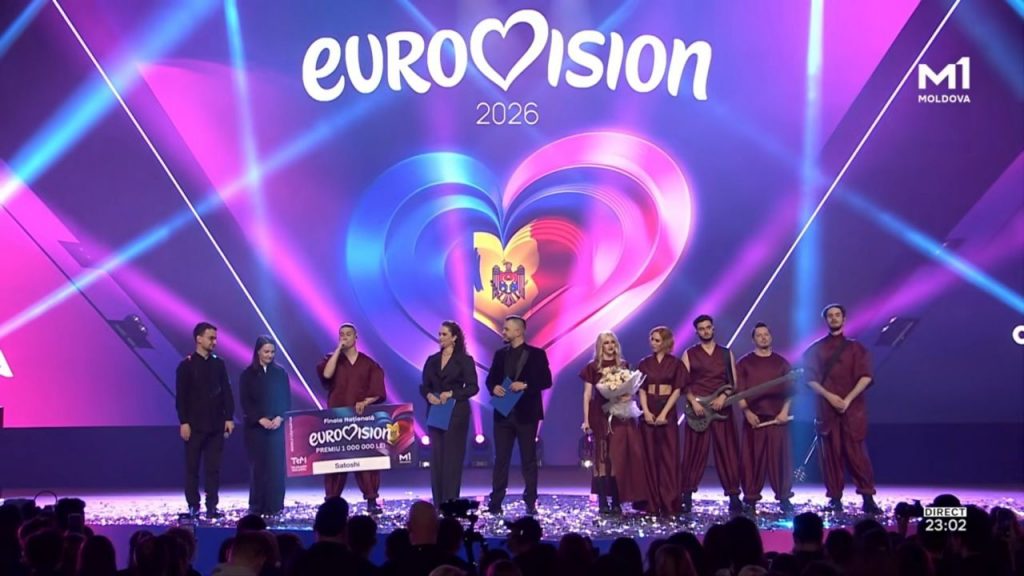
For once, the most interesting moment didn’t come when the votes were read out.
Yes, Satoshi won Moldova’s National Final for Eurovision Song Contest 2026 in emphatic fashion with “Viva, Moldova!”. Yes, he topped the international jury, the national jury and the televote. Yes, the numbers were decisive.
But what lingered after the confetti settled were not the points.
It was what he said next.
A First Competition, Not a Calculated Career Move
Standing on the stage after his victory, Satoshi didn’t sound like an artist ticking off a long-planned career milestone. In fact, he openly admitted something that would terrify most Eurovision strategists: this was his first ever music competition.
Self-taught. No contest history. No “this has been my dream since childhood” script.
Instead, he spoke about music, roots and belief — not in himself alone, but in the place he comes from.
“I truly believe we have something to offer the world, to Europe.
Our culture, our people, our inner richness… it’s extraordinary.”
It didn’t feel rehearsed. It felt sincere. Almost disarming in a contest often built on confidence bordering on choreography.
Moldova, Framed as More Than a Flag
Satoshi’s message wasn’t “vote for me”. It was “look at us”.
He talked about Moldova not as an underdog needing validation, but as a country full of warmth, talent and depth that simply deserves to be seen. That framing matters — especially at Eurovision, where smaller countries often oscillate between self-deprecation and overcompensation.
“Viva, Moldova!” suddenly made more sense in that context. Not a slogan. Not a chant. A statement of presence.
The Votes Only Confirmed the Feeling
The numbers, of course, backed it all up.
More than 13,000 televotes went to Satoshi, placing him comfortably ahead of the rest of the field. Pavel Orlov finished second with “Can’t Say Goodbye”, while Cătălina Solomac took third place with “Pink Margarita”, buoyed by strong public support.
But the rare thing here wasn’t the margin. It was the alignment.
Juries and viewers told the same story, in the same language, without contradiction.
That doesn’t happen often.
Looking Ahead to Vienna, With Adjustments Promised
Speaking later to Moldova’s public broadcaster, Satoshi admitted he knew he was among the favourites — but said he hadn’t expected such overwhelming backing from the public. He also confirmed that the performance will be refined ahead of Vienna, adapting it for a bigger stage and a broader audience.
That balance will be key: evolving the package without sanding down what made it resonate in the first place.
There will be support to do just that. Teleradio-Moldova awarded Satoshi a one-million-lei grant to fund preparations for Eurovision — a practical signal of trust, not just celebration.
A Win That Feels Bigger Than a Result
Satoshi didn’t win because Moldova needed a safe option.
He didn’t win because the song was engineered for points.
He won because, for one night, an artist stood on stage and spoke about his country the way people speak about home — with pride, affection and a quiet certainty that it’s worth sharing.
Whether Europe agrees in Vienna is still an open question.
But Moldova isn’t sending doubt.
It’s sending belief.
Source: Moldova1