Belgian artists speak out on Eurovision 2026: “Neutrality no longer holds”
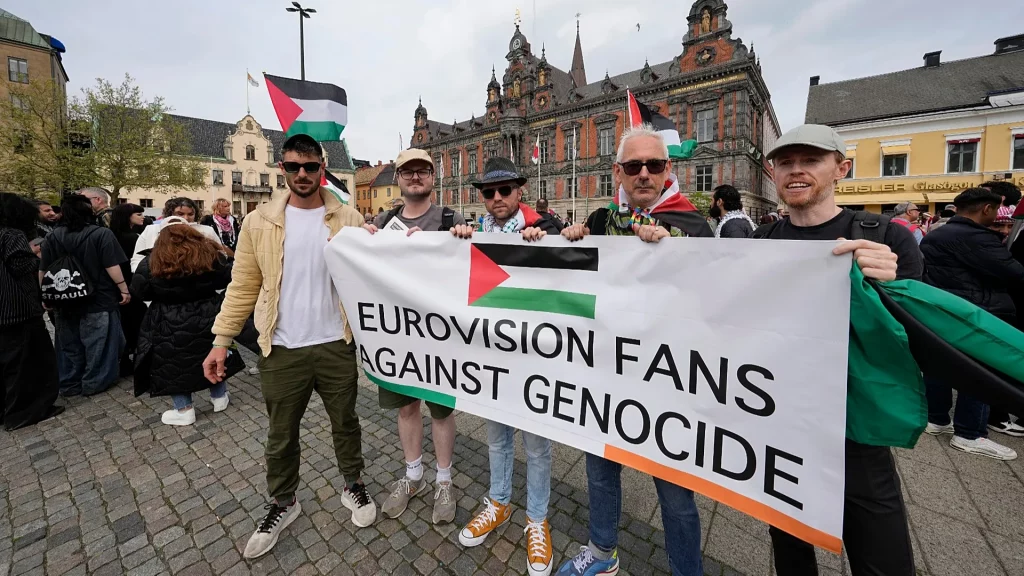
The Eurovision 2026 debate has officially moved beyond fan forums and comment sections. This time, it’s coming straight from the cultural sector itself.
A collective of Belgian artists and cultural workers has published a powerful open letter criticising the continued participation of Israel in Eurovision Song Contest 2026, and calling on Belgium’s public broadcaster to reconsider its involvement in the contest.
Their reaction followed the confirmation, on 4 December, that Israel would once again take part in Eurovision. For the signatories, that decision landed like a shock. Not because it was unexpected, but because of what it represents.
The comparison that won’t go away
The letter draws an unavoidable parallel. In February 2022, after Russia invaded Ukraine, the European Broadcasting Union excluded Russia from Eurovision in under 48 hours. Swift. Decisive. Public.
Fast forward to now, and Israel remains in the competition despite what the collective describes as an ongoing campaign of violence against Palestinians. For them, this is not a matter of nuance. It’s a double standard that undermines the EBU’s repeated claims of political neutrality.
And once that neutrality cracks, the whole argument starts to wobble.
Belgium’s broadcasters in the spotlight
The criticism is aimed directly at RTBF and VRT, who are jointly responsible for selecting Belgium’s Eurovision entry this year.
While broadcasters in countries such as Spain, Ireland, Iceland, the Netherlands and Slovenia have publicly questioned their participation, Belgium’s two public channels have chosen to stay in. According to the collective, that choice represents a serious ethical failure for public service media.
In short: staying in the contest is not a neutral act when the rules themselves appear selectively applied.
“Art-washing” and the limits of culture
One of the strongest accusations in the text is the role of what the artists describe as Israeli “art-washing”. The argument is that large cultural events are being used to soften international perception and distract from policies of occupation, colonisation and apartheid.
In the context of Gaza, which the UN and major human rights organisations have described in the most serious terms, the collective argues that participation in Eurovision allows Israel to project an image of normality and modernity while violence continues on the ground.
They are explicit: welcoming Israel on such stages does not help peace-oriented voices. It reassures those who believe there are no meaningful consequences for continued oppression.
When “keeping politics out” becomes political
The EBU’s insistence that Eurovision should remain apolitical is described as increasingly untenable. Accepting Israel’s participation is itself a political choice, particularly given that Israel’s public broadcaster KAN operates under direct government influence and routinely echoes official narratives.
For the collective, art and culture absolutely can build bridges. But only when they operate within a genuinely humanist and universal framework. In this case, they argue, those conditions simply aren’t there.
A clear call to action
The letter ends with a direct appeal: RTBF should suspend its participation in Eurovision 2026 for as long as Israel remains welcome in the contest.
This isn’t framed as a symbolic gesture. It’s presented as a matter of responsibility. Of aligning public service values with actions. Of refusing to normalise what the signatories describe as the most serious violations of international law.
Eurovision has always liked to describe itself as a space of unity.
Belgium’s artists are now asking whether unity still means anything when it stops at the edge of human suffering.
The debate is no longer hypothetical.
And it’s no longer quiet.
Source: La libre