Austria Is Rethinking Private Security Before Eurovision 2026 and Honestly, It’s Not a Bad Moment
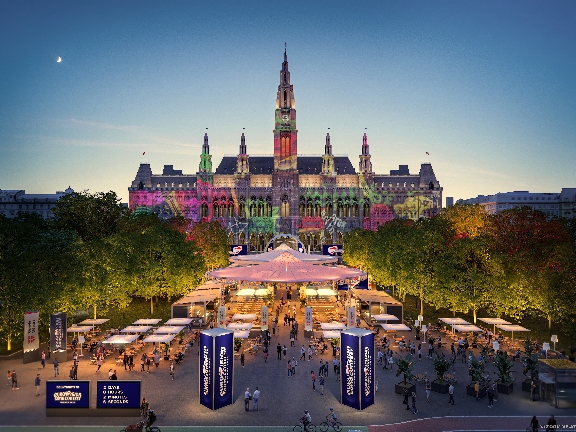
Eurovision coming to Vienna in 2026 is meant to be about songs, staging and which delegation forgets where the cameras are. But behind the scenes, Austria is dealing with something far less glamorous and far more necessary: security.
With the Eurovision Song Contest 2026 getting closer, the Austrian government has decided that the way private security companies currently operate might not be good enough for an event of this size. And reading between the lines, that’s a polite way of saying the system has been running on hope and regional patchwork for too long.
The Problem Everyone Knew About (But Lived With Anyway)
Right now, Austria’s private security sector works under rules that vary depending on where you are. Training standards are not unified. Suitability checks are inconsistent. Oversight depends on the federal state. And if a company or an employee racks up problems in one region, there is no proper national record following them elsewhere.
Which means that, yes, in theory, someone who should not be working security at major events can simply move on and start again somewhere else. Not ideal. Especially not when you are about to host tens of thousands of fans, dozens of delegations and global media attention.
Eurovision did not create this situation. But it is very good at exposing it.
What the Government Wants to Change
The big idea at the centre of the proposed reform is a national register of administrative sanctions for private security companies and their staff. Nothing flashy. Just a central system where violations and disciplinary issues are actually recorded and shared.
The logic is refreshingly basic: if someone has a history of problems, authorities should be able to see it. And if a company keeps cutting corners, that should not disappear when it crosses a regional border.
On top of that, the government is looking at stricter training and certification rules, as well as clearer definitions of what private security staff are allowed to do. This matters more than it sounds. At big international events, “crowd control” can turn into “real responsibility” very quickly, and vague rules help no one.
The Timing Is… Tight
Officially, the aim is to get these changes approved by parliament before May 2026, so they can apply to Eurovision. That sounds reasonable until you remember how legislation usually works.
Trade unions have already raised an awkward point: many security contracts linked to Eurovision have been tendered under the old rules. Which leads to the obvious question. Even if the law changes, will it actually change who is working on the ground when Eurovision arrives?
That doubt does not make the reform pointless. But it does suggest that expectations should stay realistic.
Eurovision as the Wake-Up Call
There is something very Eurovision about all this, even if it has nothing to do with music. Hosting the contest forces countries to look closely at systems they have been getting away with not fixing.
This reform is not about overreacting to Eurovision. It is about using Eurovision as the deadline that finally makes reform unavoidable.
From a fan’s point of view, this is not background noise. Safety, professionalism and clear responsibility are part of what makes a contest of this scale credible. No amount of LEDs can compensate for structural weaknesses behind the scenes.
Whether Austria manages to get all of this in place in time for Vienna is still an open question. But acknowledging the problem now, instead of pretending it does not exist, is already a step forward.
And yes, it is probably a step that should have happened long before Eurovision came knocking.
Source: Thelocal