Slovenia Withdraws from Eurovision 2026: Broadcaster Says It “Will Not Stand on the Same Stage” as Israel
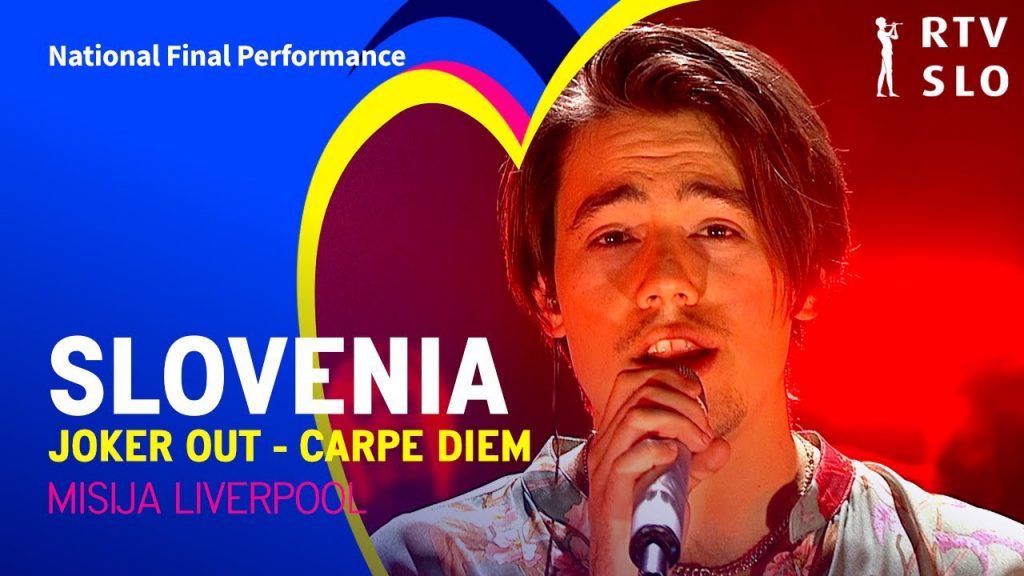
Slovenia will not take part in Eurovision 2026. The announcement followed a tense and at times confusing Winter General Assembly in Geneva, where calls for a secret vote on Israel’s participation were rejected and member broadcasters were left debating a motion that, according to several delegations, felt deliberately opaque.
RTV Slovenija was among the broadcasters pushing for a secret ballot alongside Spain, Montenegro, the Netherlands, Turkey, Algeria and Iceland. The vote never materialised. Instead, the Assembly was asked to decide whether Eurovision should proceed under the “planned scenario” for 2026 — a scenario which effectively kept Israel in the competition without requiring a direct vote on the issue.
In the end, 11 states backed a vote on participation, five abstained, and the rest opposed any changes.
That was enough clarity for Slovenia.
After the meeting, the broadcaster’s director-general Natalija Gorščak told TV Slovenija that “Slovenia will not participate. The Spanish won’t either, the Dutch won’t, and neither will the Irish.”
Her conclusion was blunt, and not delivered for dramatic effect.
“We cannot stand on the same stage as a representative of a country that has committed genocide”
If the Assembly tried to be diplomatic, Slovenia certainly did not.
Ksenija Horvat, Director of TV Slovenija, reminded colleagues that the broadcaster itself had pushed the EBU to confront the controversy around Israel’s involvement. She stated plainly that the EBU “could have shown moral and ethical leadership” and that it had failed to do so.
Her reasoning was stark:
- Gaza is the only territory in the world where foreign journalists cannot operate.
- People continue to die in “unbearable humanitarian conditions”.
- Slovenia refuses to stand on the same stage as a representative of a country responsible for what they describe as a genocide.
Gorščak went further, addressing the Assembly directly. She pointed out the contrast between the EBU’s swift exclusion of Russia in 2022 and its hesitation now. She reminded members that over 200 journalists have been killed in Gaza, and that the Israeli performance last year was openly political.
Her most cutting line came at the end:
“We will not participate in Eurovision if Israel is there. In the name of the 20,000 children who have died in Gaza.”
No metaphors. No softening. Just a line in the sand.
The wider fracture inside the EBU
Slovenia’s decision puts it in company with Spain, Ireland and the Netherlands — all of whom have already announced withdrawals if Israel remains in the competition.
Spain went so far as to accuse the EBU leadership of causing “the greatest internal tensions in its history.”
Avrotros in the Netherlands cited the “serious Israeli violation of press freedom”.
Ireland denounced the killing of journalists and the refusal to grant access to international media.
Slovenia added its own language, far more direct than most broadcasters are willing to use on record.
Eurovision 2026, which Austria will host in Vienna, is now facing a landscape where some members insist Israel must participate and others insist they cannot stand on stage with it.
Germany’s culture minister even told Reuters that Eurovision “cannot exist without Israel”, a statement that landed like a brick in the middle of an already divided room.
The EBU tries to keep the show intact
Before the controversies overshadowed the meeting, member states were meant to discuss changes to the voting system, including:
- The return of juries to both semi-finals
- Younger jury members aged 18–25
- A halved televote limit to reduce bloc voting
- New technical safeguards against coordinated vote manipulation
- A ban on government-led pre-show promotion — aimed at countries whose state agencies bankroll large-scale campaigns (including Israel)
These reforms now feel like footnotes in a week where Eurovision looked less like Europe’s favourite music show and more like a diplomatic fault line.
A contest edging towards a breaking point
Paul Jordan, one of Eurovision’s most respected analysts, warned before the meeting that the contest was heading for a “defining moment”.
He wasn’t exaggerating.
With four broadcasters already out, internal tensions rising, and the EBU refusing to hold a direct vote on Israel, Eurovision 2026 is shaping up to be the most politically charged edition in decades.
Slovenia’s message, however, is the clearest of all:
they will not be in Vienna if Israel is there. And at this point, they don’t expect to be.
Source: RTVSLO